Concert Noise Levels: Measuring the Volume and Protecting Your Ears
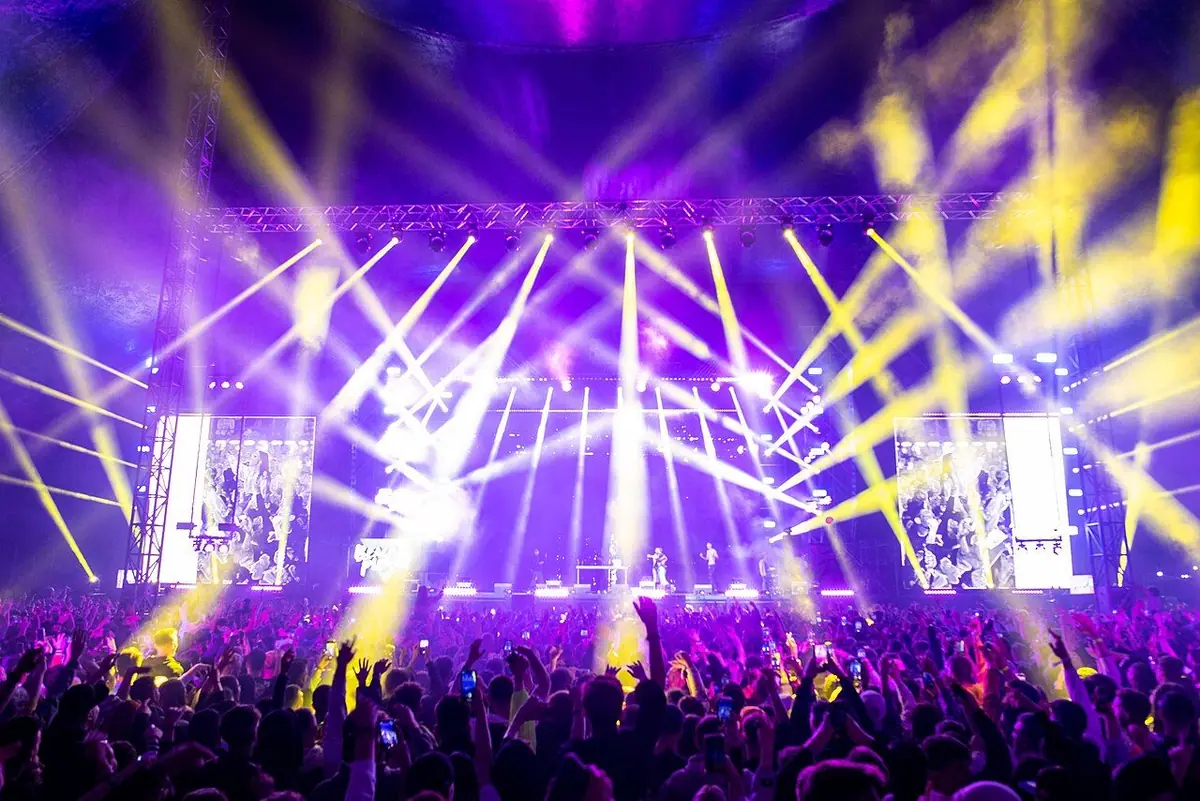
Concerts and clubs are often the loudest places people go by choice. Audience areas commonly measure in the 90s to over 100 dBA. In 2022, WHO published a global standard recommending that venues keep the average at or below 100 dB LAeq over any 15 minutes. That is still far above the levels NIDCD considers risky with long exposure, so earplugs make sense at almost any amplified show.
What levels to expect
Approximate audience-area levels, which vary with genre, venue size, and the mix:
| Setting | Approximate level |
|---|---|
| Acoustic set, small venue | 80–90 dBA |
| Rock or pop concert, mid-room | 95–105 dBA |
| Near the speaker stacks or front rows | Often above 105 dBA |
| Nightclub dance floor | 95–105 dBA |
| Outdoor festival, near main stage | 95–105 dBA |
Bass-heavy music also produces strong low-frequency energy that A-weighted readings play down. You may feel the bass more than the dBA figure suggests.
How to measure with the Reatims meter
- Open the sound level meter before the show and allow microphone access.
- Hold the phone at chest height, screen facing you, mic uncovered and not pressed against your body.
- Use Slow response to smooth out the beat. Watch the Leq over 10 to 15 minutes, which is the same window the WHO standard uses.
- Max and Peak hold show the loudest moments, but compare the Leq with the 100 dB guideline.
- Move around. Check near the speakers, mid-room, and at the back or bar, and note how much distance helps.
Phone microphones often limit or compress at high levels, so treat readings near or above 100 dB as a minimum. The real level may be higher. See smartphone sound meter accuracy.
What the benchmarks say
The WHO Global Standard for Safe Listening Venues and Events (2022), part of WHO’s Make Listening Safe initiative, sets six features:
- A maximum average sound level of 100 dB LAeq over 15 minutes
- Live monitoring and recording of levels with calibrated equipment by designated staff
- Optimized venue acoustics and sound systems
- Personal hearing protection available for the audience, with instructions
- Quiet zones for people to rest their ears
- Training and information for staff
These are recommendations, not US law. For context, NIDCD notes that long or repeated exposure at or above 85 dBA can cause hearing loss. Each 3 dB increase halves the safe time, so a few hours near 100 dB is a large dose. You can check with the noise exposure calculator.
Practical ways to reduce noise
Before the show
- Pack earplugs. Foam plugs are cheap and effective. Musician’s plugs keep the music sounding natural.
- Some venues hand out earplugs; ask at the bar or merch stand.
During the show
- Wear the plugs for the whole set, not just the loudest songs.
- Stand back from the speakers. Mid-room or near the sound desk usually sounds better and is less loud.
- Take breaks in quieter areas or outside between sets.
- If you have to shout to be heard at arm’s length, the level is high enough to warrant protection.
After the show
- Ringing ears or muffled hearing are warning signs. NIDCD notes that such temporary loss may fade within 16 to 48 hours but can still reflect lasting damage. Give your ears quiet time.
For more on protectors and listening habits, read safe listening with headphones and at concerts.
General information, not medical advice.
FAQ
How loud is a typical concert?
Amplified concerts and clubs commonly run in the 90s to over 100 dBA in the audience area, with the front near the speakers usually loudest. Levels vary a lot by genre, venue, and sound engineer.
Can my phone accurately measure concert volume?
Only roughly. Built-in phone microphones often compress or limit at very high levels, so readings near or above 100 dB are likely to be underestimates.
Will earplugs ruin the music?
Not if you choose the right kind. Musician's or high-fidelity earplugs lower volume fairly evenly across frequencies, so the music stays clear, just quieter.