Workshop Noise Levels: Measuring Power Tools and Protecting Hearing
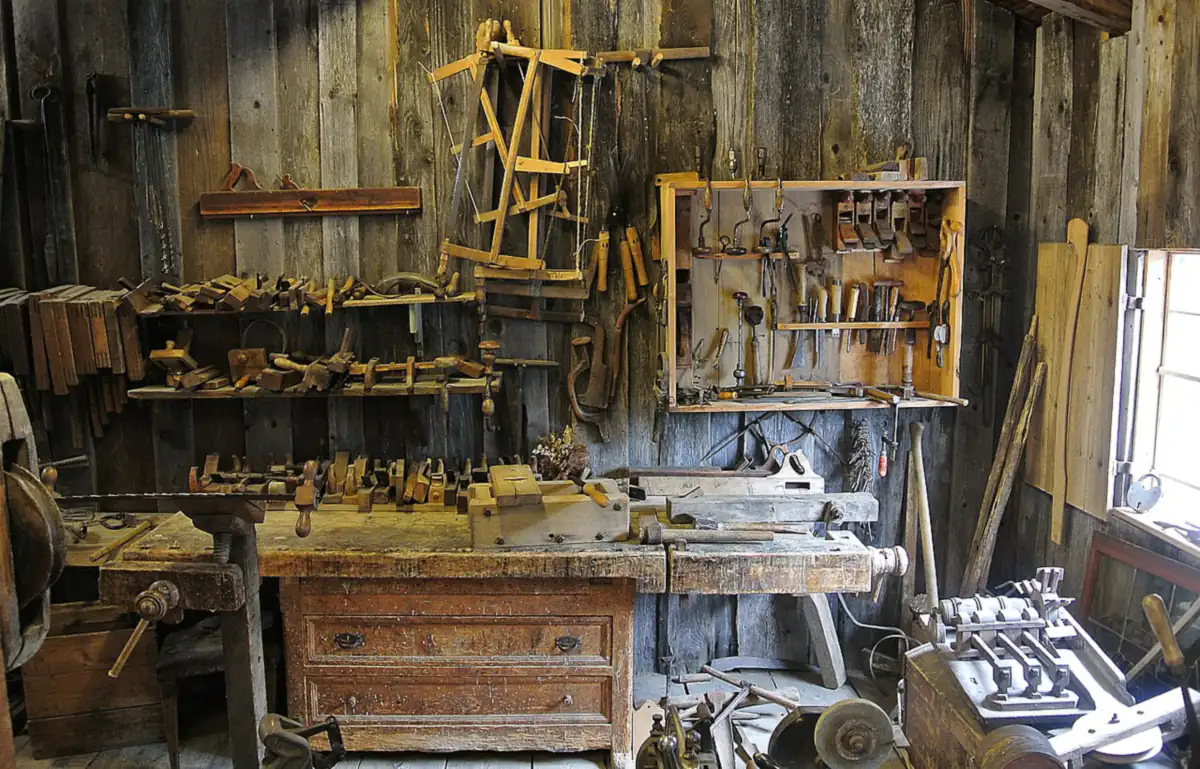
Workshops are one of the places where everyday noise can reach hearing-damage levels quickly. Many power tools measure well above 85 dBA at the operator’s ear, and some run past 100 dBA. NIOSH recommends limiting exposure to 85 dBA averaged over 8 hours, with the allowed time halved for every 3 dB increase. In practice, that means hearing protection whenever loud tools are running.
What levels to expect
Approximate operator-position levels. They vary with the tool, the blade, the material, and the room.
| Source | Approximate level |
|---|---|
| Shop vacuum, dust collector | 75–90 dBA |
| Drill, orbital sander | 80–95 dBA |
| Circular saw, jigsaw | 90–105 dBA |
| Table saw, miter saw, router, planer | 90–110 dBA |
| Angle grinder on metal | 95–110 dBA |
| Hammering, nail gun (impulse) | Short peaks well above these averages |
Hard walls and concrete floors bounce sound around, so a small garage shop can read louder than the same tool outdoors.
How to measure with the Reatims meter
- Calibrate if you can, using this guide.
- Wear hearing protection while you measure.
- Hold or mount the phone near where your head is during the cut, about 30 cm from your ear and not right next to the blade or exhaust.
- Start the sound level meter on Fast response to see how high levels jump, then note the Max and Peak hold.
- For exposure, use Slow response and read the Leq over a full working session, including idle time.
- Put the Leq and your hours into the noise exposure calculator to estimate your daily dose.
Phone microphones often limit or compress at high levels. A reading of 95 dBA could mean the real level is 95 or higher. Treat high readings as a floor, not a ceiling.
What the benchmarks say
- NIOSH: recommended exposure limit of 85 dBA as an 8-hour time-weighted average, with a 3 dB exchange rate. Each 3 dB increase halves the allowed time. NIOSH notes that workers exposed at or above this level are at risk of significant hearing loss over a working lifetime.
- OSHA (29 CFR 1910.95): permissible exposure limit of 90 dBA over 8 hours with a 5 dB exchange rate, and an 85 dBA action level that triggers a hearing conservation program. OSHA’s rules apply to employers. For details, see OSHA workplace noise rules.
- Hobby shops: OSHA doesn’t apply at home, but your ears respond to noise the same way. The more protective NIOSH figure is the better personal guide.
Practical ways to reduce noise
At the source
- Keep blades and bits sharp. Dull cutters run louder and longer.
- Choose quieter tools where you can, such as induction-motor saws, quieter dust collectors, or low-noise compressors.
- Fix rattles, loose guards, and worn bearings.
- Put compressors and dust collectors in a closet or enclosure, or outside the work area.
In the room
- Mount machines on rubber or cork pads to reduce vibration transmitted to floors and benches.
- Add absorptive panels (mineral wool behind fabric) on walls to tame reverberation.
- Close doors to the house and seal gaps to protect the rest of the household.
At your ears
- Wear earplugs or earmuffs every time a loud tool runs, even for “just one cut.”
- For grinding or long planer sessions, consider plugs plus muffs.
- Check what your protector’s rating means in practice with the NRR calculator.
General information, not medical advice.
FAQ
How long can I run a table saw without hearing protection?
It depends on the level at your ear. Under the NIOSH approach, 85 dBA is allowed for 8 hours and the time halves with every 3 dB, so at around 100 dBA it falls to roughly 15 minutes a day. Wearing protection whenever loud tools run is the simple answer.
Can my phone measure power tool noise accurately?
It gives a useful estimate, but built-in microphones can compress at high levels, so readings above about 90 to 100 dB may be too low. Treat a phone reading in that range as a minimum.
Do OSHA rules apply to a home workshop?
OSHA standards apply to employers and employees, not to hobbyists at home. The same exposure science still applies to your ears, so the NIOSH limit is a sensible personal guide.