Office Noise Levels: Measuring and Reducing Distraction
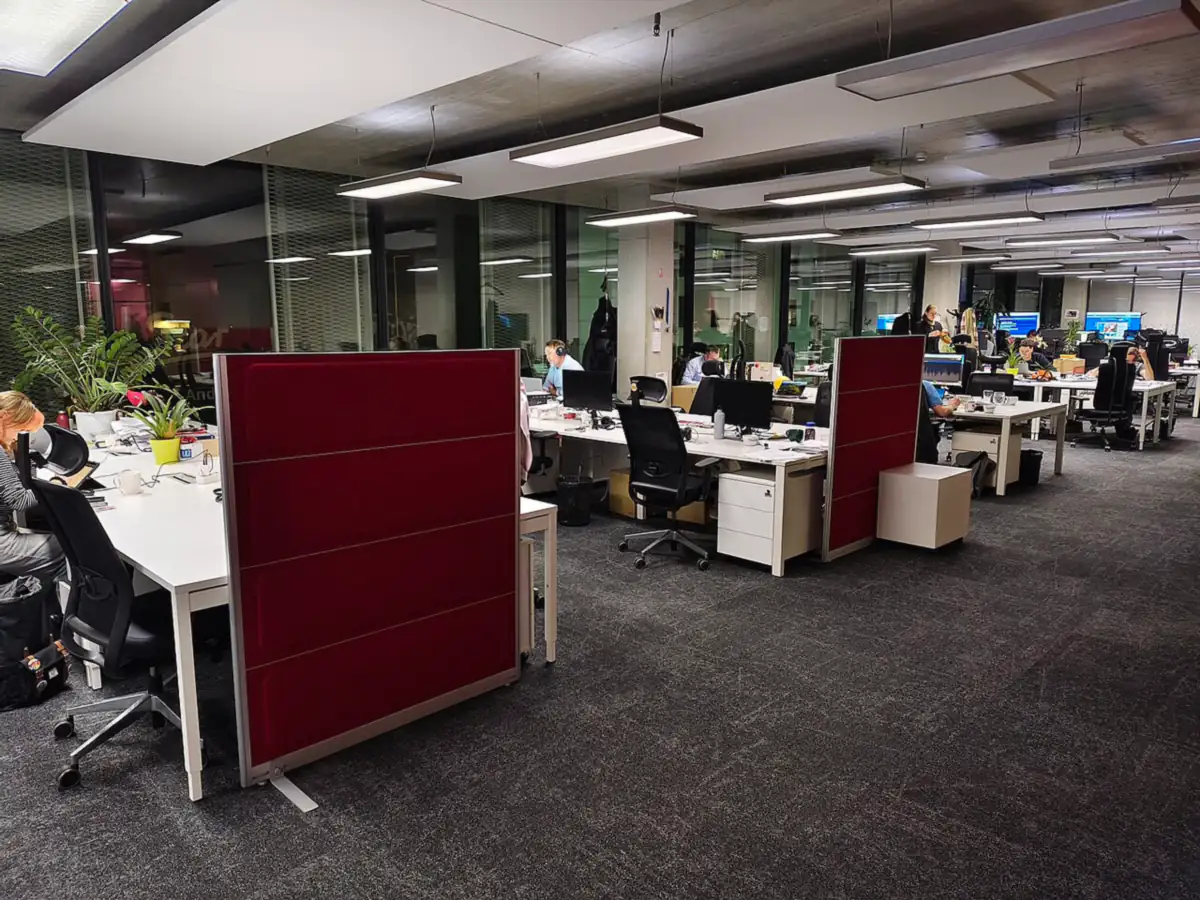
Most office noise is a concentration problem, not a hearing-safety problem. Private offices and quiet rooms usually measure in the 40s dBA, while busy open-plan floors and call centers often run in the high 50s to mid 60s. There is no US legal limit for office noise. EPA’s 1974 Levels Document identified 45 dB indoors as the level that avoids activity interference, which is a useful reference point.
What levels to expect
Approximate ranges. Building systems, layout, and headcount all change the picture.
| Setting | Approximate level |
|---|---|
| Private office, door closed | 40–48 dBA |
| Quiet open-plan floor | 45–55 dBA |
| Busy open plan, phone calls | 55–65 dBA |
| Call center or sales floor | 60–70 dBA |
| Meeting room, lively discussion | 60–70 dBA |
The level itself is only part of the story. Intelligible speech, a coworker on a call two desks away, is often more distracting than a louder but steady hum.
How to measure with the Reatims meter
- Place the phone at your desk, roughly where your head is when you work, with the microphone uncovered.
- Start the sound level meter and choose Slow response for steady background levels.
- Measure for 15 to 30 minutes during a normal workday. Note the Leq: that’s the average to compare with the 45 dB reference.
- Check the Max to see how loud single events get: laughter, a printer, a door.
- Compare spots. Repeat near the kitchen, the printer, a quiet zone, and a meeting room.
- Export CSV if you want to share results with facilities. The time stamps show when noise peaks.
Note the time of day and how many people were in. A Monday morning and a Friday afternoon can differ a lot.
What the benchmarks say
- EPA Levels Document (1974): 45 dB indoors identified as preventing activity interference and annoyance. EPA’s summary applies it to homes, hospitals, and schools; offices aren’t the focus, but the same logic about speech and concentration carries over.
- WHO Guidelines for Community Noise (1999): discusses how background noise interferes with speech communication indoors, along with annoyance.
- NIOSH: sets a recommended exposure limit of 85 dBA averaged over 8 hours to protect hearing. Office noise is almost always far below this, so hearing protection is rarely needed. Comfort and productivity are the concern.
Practical ways to reduce noise
Absorb
- Acoustic ceiling tiles, carpet, upholstered furniture, and fabric-wrapped wall panels reduce echo and how far voices carry.
- Desk-mounted screens with absorptive surfaces help, especially near phone users.
Block and separate
- Put printers, kitchens, and collaboration zones away from focus areas.
- Provide phone booths or small rooms for calls and video meetings.
- Seal doors in meeting rooms; see soundproofing basics.
Mask
- Low-level sound masking, a gentle broadband sound, can make distant speech less intelligible. You can hear what this sounds like with our noise generator. Keep it subtle: a masking system that’s too loud becomes noise itself.
Agree on etiquette
- Quiet hours or quiet zones
- Headsets for calls and lower speaking volume on calls
- Notifications set to vibrate
To put your readings in context, compare them with the noise levels chart.
FAQ
Is office noise loud enough to damage hearing?
Usually not. Typical office levels sit well below the 85 dBA level that NIOSH uses as its recommended exposure limit over 8 hours. The main problems are distraction, fatigue, and difficulty concentrating.
Why does a quiet office sometimes feel more distracting?
When the background is very quiet, individual conversations stand out more clearly. That is why some open-plan offices add low-level sound masking to make nearby speech less intelligible.
What's the best way to measure noise at my desk?
Place your phone on the desk at about head height, run the meter on slow response for 15 to 30 minutes during a normal workday, and use the Leq average rather than the maximum.