Safe Listening Levels for Headphones and Concerts
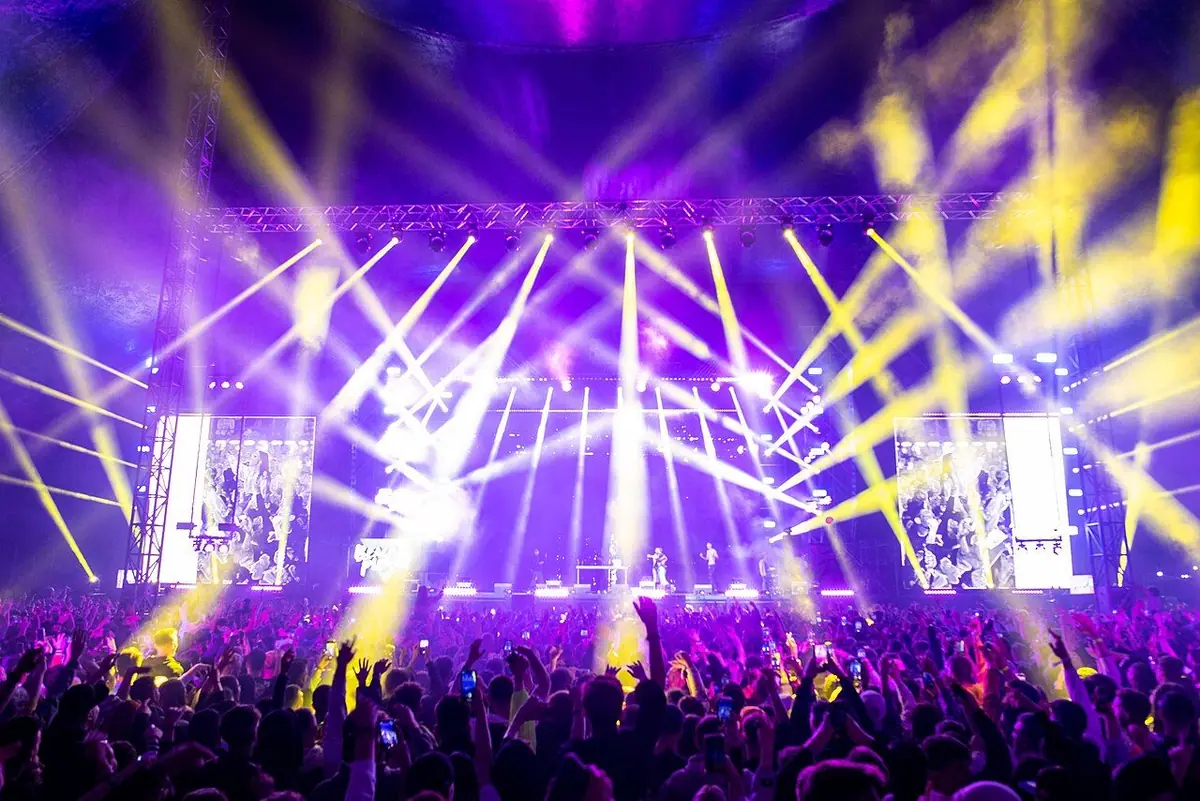
Safe listening comes down to level multiplied by time. WHO and ITU use 80 dB averaged over 40 hours a week as the reference dose for adults on headphones, and 75 dB for children and other sensitive listeners. For concerts and clubs, WHO recommends that venues keep the average at or below 100 dB LAeq over any 15 minutes, which is loud enough that earplugs are still a good idea.
Why level and time both count
Hearing damage from noise depends on total sound energy, not just peak loudness. NIDCD notes that sounds at or below 70 dBA are unlikely to cause hearing loss even after long exposure, while long or repeated exposure at or above 85 dBA can.
Standards like WHO-ITU H.870 use an equal-energy approach. Each 3 dB increase doubles the sound energy, so it halves the time you can listen before you use up the same dose. Ten hours at one level carries roughly the same risk as five hours at 3 dB louder.
You can work through this with our noise exposure calculator or our decibel calculator.
Headphones and earbuds
The WHO-ITU standard
WHO’s Make Listening Safe initiative led to a joint WHO-ITU standard for personal audio devices (ITU-T H.870, 2019). It recommends that phones and players track listening as a percentage of a weekly “sound allowance,” with two modes:
| Mode | Reference dose |
|---|---|
| Adults | 80 dB for 40 hours per week |
| Children and sensitive users | 75 dB for 40 hours per week |
The standard also calls for personalized listening reports and volume-limiting options, such as automatic volume reduction when the allowance runs out. Many recent phones offer headphone exposure tracking along these lines. Look in the hearing or sound settings.
The 60/60 rule
You may have seen “60% volume for no more than 60 minutes at a time.” This is an informal rule of thumb, not part of the WHO-ITU standard. It’s a reasonable starting habit, but 60% volume on one phone and headphone combination can be much louder than on another. Use your device’s exposure tracking when it’s available.
Habits that help
- Block outside noise instead of drowning it out. WHO recommends well-fitted, and where possible noise-canceling, headphones. On a train or plane, noise canceling lets you listen at a lower level.
- Take breaks. Give your ears quiet time between long listening sessions.
- Watch for warning signs. Ringing ears or muffled hearing after listening means the level was too high.
Concerts, clubs and festivals
The WHO venue standard
In March 2022, WHO released the Global Standard for Safe Listening Venues and Events. It lists six recommendations:
- A maximum average sound level of 100 dB (LAeq over 15 minutes)
- Live monitoring and recording of sound levels with calibrated equipment by designated staff
- Optimized venue acoustics and sound systems
- Personal hearing protection available to audiences, with instructions
- Quiet zones where people can rest their ears
- Training and information for staff
These are recommendations, not US law, and many events run louder. Even at exactly 100 dB, the exposure is far above the 80 dB weekly reference for headphones, so a few hours at a show can use up a large share of a week’s allowance.
Checking the level yourself
Open the Reatims sound level meter on your phone during a set. Hold the phone at chest height with the microphone uncovered, and watch the average (Leq) over several minutes rather than the moment-to-moment peaks.
Phone microphones often compress or limit very loud sound, so readings near 100 dB and above are likely to be underestimates. Our guide to smartphone sound meter accuracy explains why.
Earplugs at concerts
WHO advises wearing earplugs at noisy venues. A few options:
- Foam earplugs give strong protection and cost little, but they cut high frequencies more than lows, so music sounds dull. Roll them tight and insert them deep for a good seal.
- Musician’s (high-fidelity) earplugs lower sound more evenly across frequencies, so vocals and cymbals stay clear. They usually have lower ratings than foam, which is fine for most concerts.
- Custom molded plugs are worth considering if you go to shows often or play in a band.
To see what an earplug’s rating means in practice, read hearing protection NRR explained.
Other ways to cut exposure at a show
- Stand away from the speakers. Level drops with distance, and the front rows near the stacks are usually the loudest spot in the room.
- Use the quiet zones or step outside between sets.
- Limit how long you stay in the loudest areas.
- Don’t shout over the music for long stretches. If you have to yell to be heard at arm’s length, the room is loud enough to need protection.
After a loud event
Temporary ringing or dull hearing after a concert means your ears were under stress. NIDCD notes that this kind of temporary loss can fade within 16 to 48 hours, but research suggests there may still be lasting damage. Give your ears quiet time afterward, and if symptoms persist, see an audiologist or doctor.
Summary
- Headphones: aim to stay within 80 dB over 40 hours a week (75 dB for kids), and use your phone’s exposure tracking.
- The 60/60 rule is informal and only approximate.
- Venues: WHO recommends no more than 100 dB LAeq over 15 minutes, and that is still loud.
- Earplugs, distance from the speakers, and breaks are the most effective tools you have.
General information, not medical advice.
FAQ
How loud is too loud for headphones?
The WHO-ITU standard uses 80 dB averaged over 40 hours a week as the reference for adults, and 75 dB for children and sensitive users. Louder listening uses that allowance up faster: about half the time for each 3 dB increase.
Is the 60/60 rule official?
No. 'Listen at 60% volume for 60 minutes at a time' is an informal rule of thumb. It's easy to remember, but 60% volume produces very different sound levels on different phones and headphones.
How loud are concerts allowed to be?
There is no single US legal limit for audiences. The WHO Global Standard for Safe Listening Venues and Events (2022) recommends a maximum average of 100 dB LAeq measured over 15 minutes, along with live monitoring, quiet zones, and earplugs for patrons.
Do earplugs ruin the sound at a concert?
Foam plugs muffle high frequencies, but flat-response musician's earplugs lower the volume fairly evenly, so the music still sounds clear, just quieter.