LUFS Loudness Explained: LUFS vs. LKFS vs. dB SPL
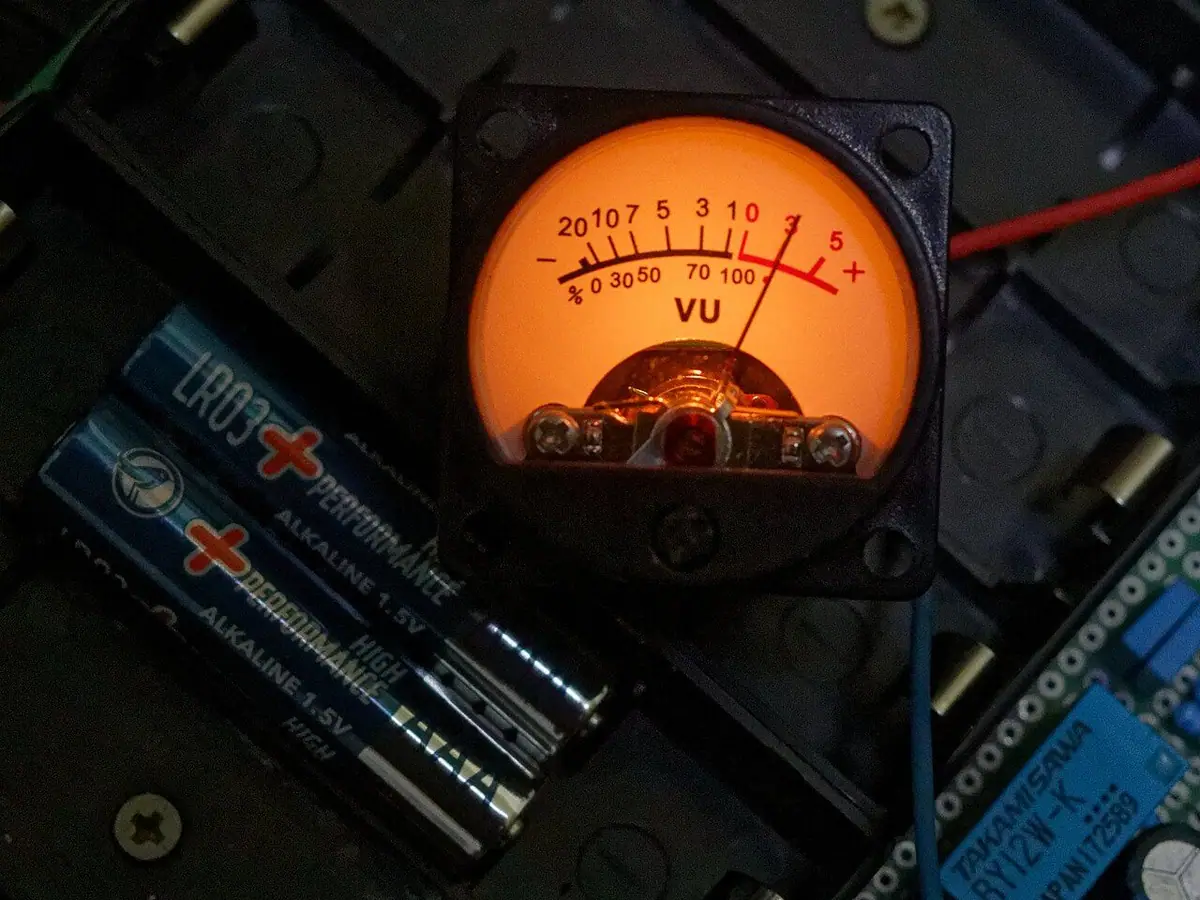
LUFS (Loudness Units relative to Full Scale) measures how loud a piece of digital audio is likely to sound to a listener. It’s calculated with the ITU-R BS.1770 algorithm. LKFS is the same measurement under another name. Broadcasters use it to keep programs and ads at a consistent level: −23 LUFS in Europe under EBU R128 and −24 LKFS in the US under ATSC A/85. It describes a signal in a file or stream, not sound in a room, so it is not dB SPL, and the Reatims sound level meter does not measure it.
Why loudness metering exists
Older audio meters showed peak or average electrical level, and neither matches how loud something sounds. A heavily compressed ad and a dynamic film scene could peak at the same level while one sounds much louder.
That mismatch led to complaints about loud commercials and jarring jumps between channels or tracks. Loudness meters fix this by weighting the signal to approximate human hearing and averaging it over time.
How BS.1770 measures loudness
ITU-R Recommendation BS.1770, “Algorithms to measure audio programme loudness and true-peak audio level,” defines the method. The current version is BS.1770-5 (2023). In outline:
- K-weighting. The signal passes through a filter that de-emphasizes low bass and slightly boosts the upper mids and treble, a rough model of how the head and ear respond.
- Mean square per channel. The filtered signal power is computed for each channel.
- Channel weighting and summing. Channels are combined, with surround channels weighted slightly higher.
- Gating. For the integrated measurement, very quiet blocks are excluded so silence and near-silence don’t pull the average down.
The result is a number in LUFS (or LKFS), always negative for normal program material, because 0 is digital full scale. One LU (Loudness Unit) equals a 1 dB change, so “+2 LU” means 2 dB louder.
Common measurements
| Measurement | What it covers |
|---|---|
| Integrated loudness | The whole program, gated |
| Short-term loudness | A sliding 3-second window |
| Momentary loudness | A sliding 400 ms window |
| Loudness Range (LRA) | How much the loudness varies over the program, in LU |
| True peak (dBTP) | The highest peak, including peaks between digital samples |
Broadcast standards
EBU R128 (Europe)
The European Broadcasting Union’s R128, “Loudness normalisation and permitted maximum level of audio signals,” recommends an average program loudness of −23 LUFS. It also uses Loudness Range and Maximum True Peak Level as descriptors. The current version is 5.0, from November 2023.
ATSC A/85 (United States)
In the US, the Advanced Television Systems Committee publishes A/85, “Techniques for Establishing and Maintaining Audio Loudness for Digital Television.” It recommends a target of −24 LKFS for broadcast content. ATSC updated A/85 in July 2026, and the page also lists earlier editions.
The CALM Act
The Commercial Advertisement Loudness Mitigation (CALM) Act directed the FCC to make rules about loud commercials. According to the FCC, the rules require commercials to have the same average volume as the programs they accompany. They were adopted on December 13, 2011, and took effect on December 13, 2012. The FCC rules rely on the ATSC A/85 practice.
Streaming and music
Most major music and video streaming platforms normalize playback loudness, turning loud tracks down (and sometimes quiet tracks up) so listeners don’t have to keep adjusting the volume.
A target of about −14 LUFS integrated is commonly cited for several music streaming services. This is not an official standard. Platforms set their own reference levels, some offer different settings for album and track playback, and the numbers change over time. Podcasts and audiobooks often use different targets. Check each platform’s current specifications before you master to them.
In practice, mastering much louder than a platform’s reference doesn’t make your track sound louder there. Normalization just turns it down, and you may lose dynamics for nothing.
LUFS vs. dB SPL
These two measurements are easy to confuse because both use decibels.
| LUFS / LKFS | dB SPL (and dBA) | |
|---|---|---|
| Measures | A digital audio signal | Sound pressure in the air |
| Reference | Digital full scale | 20 micropascals |
| Measured with | Loudness meter software reading the file or stream | A microphone and sound level meter |
| Depends on | The mix and mastering | Playback volume, speakers, room, distance |
| Typical values | Around −23 to −14 LUFS | Around 30 to 110 dB in everyday life |
A track at −14 LUFS might play at a comfortable 65 dBA from a laptop or at 100 dBA at a club, depending only on the volume knob. There is no fixed conversion between them.
dB SPL is what matters for hearing health, because your ears respond to sound pressure, not to file loudness. For more on the units, see what is a decibel and dBA vs. dBC weighting.
What Reatims measures (and doesn’t)
The Reatims sound level meter uses your microphone to estimate the acoustic level in the room in dB(A). It’s useful for checking how loud playback is in a space or how loud a venue is.
Reatims does not measure LUFS. To measure the loudness of a file or stream, use a loudness meter that reads the digital audio directly. Many audio editors, DAWs, and broadcast tools include BS.1770-compliant meters.
If you work with audio, a few of our other tools may help:
- The spectrum analyzer shows the frequency content of what you’re hearing.
- The decibel calculator helps with adding levels and working out gain changes.
Quick reference
- LUFS = LKFS. Both use ITU-R BS.1770.
- EBU R128 (Europe): −23 LUFS.
- ATSC A/85 (US TV): −24 LKFS.
- Streaming: around −14 LUFS is commonly cited, but not official.
- LUFS describes a digital signal. dB SPL describes sound in the air.
FAQ
Are LUFS and LKFS the same thing?
Yes. Both are loudness measured with the ITU-R BS.1770 algorithm and relative to digital full scale; LKFS is the name used by ITU and ATSC, and LUFS is the name used by the EBU. One LU equals one dB of change.
What LUFS should I master music to for streaming?
A figure around −14 LUFS integrated is commonly cited for major streaming platforms, but it is not an official standard and services differ and change their settings. Check each platform's current documentation.
Can I convert LUFS to dB SPL?
Not directly. LUFS describes the level of a digital signal, while dB SPL describes sound pressure in the air, which depends on the playback volume, speakers, room, and distance.
Does Reatims measure LUFS?
No. The Reatims meter estimates acoustic sound levels in dB(A) from your microphone. Measuring LUFS requires a loudness meter that reads the digital audio file or stream directly.