dBA vs dBC: A, C and Z Weighting Explained
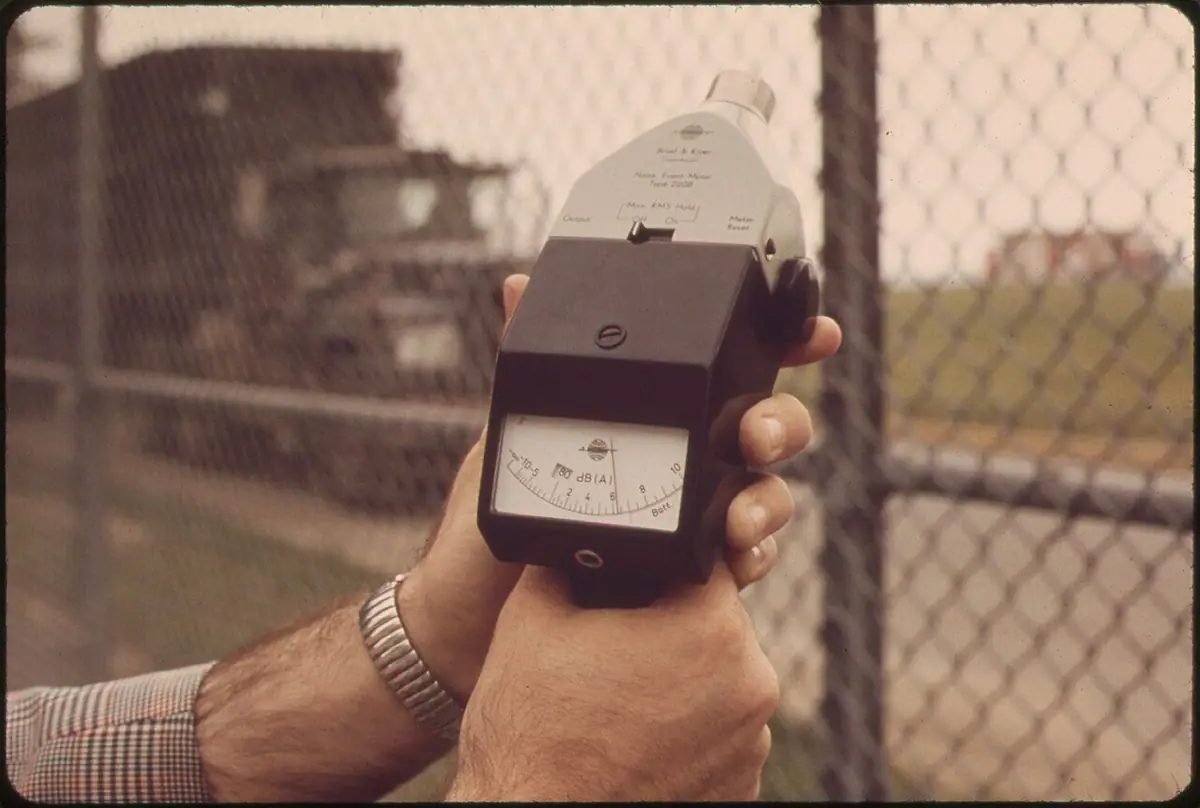
dBA and dBC are sound levels measured through two different frequency filters. A weighting reduces low and very high frequencies to roughly match how the ear hears moderate sounds, so it is the standard for noise exposure and hearing risk. C weighting is almost flat and keeps most of the bass, so it is better for loud, bass-heavy sound and for peak measurements.
What frequency weighting does
A microphone responds to all frequencies more or less equally. Your ears do not. At ordinary listening levels we are much less sensitive to deep bass and to the very top of the audible range than to the 1–5 kHz region where speech consonants live.
A frequency weighting is a filter applied inside the meter before the level is calculated. It tells the meter how much to count each frequency. All three common weightings are defined in the international sound level meter standard, IEC 61672-1, and all are set to 0 dB at 1 kHz.
A, C and Z weighting compared
| Frequency | A weighting | C weighting | Z weighting |
|---|---|---|---|
| 31.5 Hz | −39.4 dB | −3.0 dB | 0 dB |
| 63 Hz | −26.2 dB | −0.8 dB | 0 dB |
| 125 Hz | −16.1 dB | −0.2 dB | 0 dB |
| 250 Hz | −8.6 dB | 0 dB | 0 dB |
| 1 kHz | 0 dB | 0 dB | 0 dB |
| 4 kHz | +1.0 dB | −0.8 dB | 0 dB |
| 8 kHz | −1.1 dB | −3.0 dB | 0 dB |
Values are the nominal weightings at octave-band centers, rounded to 0.1 dB.
A weighting (dBA)
A weighting was originally modeled on the ear’s sensitivity at fairly quiet levels. It cuts low frequencies hard: a 31.5 Hz tone is counted almost 40 dB lower than it really is.
Despite its origins, A weighting has become the standard for almost all environmental and occupational noise work. It correlates reasonably well with hearing damage risk, and it is what the regulations use. OSHA’s noise standard specifies measurements “on the A scale of a standard sound level meter at slow response,” and the NIOSH 85 dBA limit is A-weighted as well.
C weighting (dBC)
C weighting is nearly flat from about 31.5 Hz to 8 kHz, rolling off only at the extremes. It was meant to represent the ear at high levels, where our frequency response flattens out.
Use dBC when the low end matters: subwoofers, engines, HVAC rumble, music with heavy bass, or when choosing hearing protection by the C-minus-A method.
Z weighting (dBZ)
Z stands for zero. It applies no weighting within the specified range, which IEC 61672-1 gives as 10 Hz to 20 kHz. Z replaced older, loosely defined “linear” or “flat” settings, which varied by manufacturer.
Use dBZ when you want the actual physical pressure level, or as the input for a frequency analysis.
When to use which
- Workplace exposure, hearing risk, most noise ordinances: dBA.
- Bass-heavy sound, home theater tuning, low-frequency complaints: compare dBC with dBA.
- Impulse peaks (hammers, gunshots, nail guns): C- or Z-weighted peak.
- Acoustic research and spectrum work: dBZ, often with octave or third-octave bands.
The dBC − dBA gap
Reading both weightings on the same sound is a quick diagnostic. If dBC is only 1–2 dB higher than dBA, the sound is mostly midrange and treble. If dBC is 10 dB or more higher, most of the energy is in the bass. That matters for soundproofing too, because low frequencies pass through walls far more easily. The spectrum analyzer will show you exactly where the energy sits.
Time weighting: Fast, Slow and Impulse
Frequency weighting is only half of a reading. The meter also smooths the signal over time.
- Fast (F): 125 ms time constant. Follows changes quickly.
- Slow (S): 1 s time constant. Steadier readout; OSHA specifies slow response.
- Impulse (I): a fast rise with a slow decay. Still found on many meters, but IEC 61672-1 treats it as optional and it is rarely used for assessments today.
So a reading such as “LAFmax” means: A-weighted, Fast time-weighted, maximum level.
Peak vs Lmax vs Leq
These three numbers answer different questions, and they are often confused.
Peak (Lpeak)
Peak is the highest instantaneous pressure, with no time smoothing at all. It is normally measured with C or Z weighting. A single hammer blow may have a peak 20–30 dB above its Fast-weighted maximum.
Peak matters for impulse noise. Both OSHA 1910.95 and the NIOSH criteria document use a 140 dB peak sound pressure level as the ceiling for impulse or impact noise.
Lmax
Lmax is the highest time-weighted level during the measurement, for example LAFmax or LASmax. It tells you how loud the loudest moment sounded, smoothed by the meter. It is useful for single events, such as a truck passing at night.
Leq
Leq (equivalent continuous level) is the steady level that would carry the same total sound energy as the fluctuating sound over the same period. LAeq,8h, for instance, is the A-weighted energy average over eight hours.
Leq is the right number for exposure and dose, because hearing damage relates to accumulated energy. Note that it is an energy average, not an arithmetic one: a few minutes at 100 dBA can dominate an hour that is otherwise at 60 dBA.
| Metric | Answers | Typical use |
|---|---|---|
| LAeq | How much total sound energy? | Exposure, environmental noise |
| LAFmax | How loud was the loudest moment? | Single events, sleep disturbance |
| LCpeak | How high was the instantaneous peak? | Impulse noise, hearing safety |
The noise exposure calculator turns LAeq values and durations into a daily dose.
Meter classes and phones
IEC 61672-1 defines Class 1 (precision) and Class 2 (general purpose) meters, with Class 1 having tighter tolerances, especially at frequency extremes. Compliance measurements for work or legal use need a properly calibrated meter of the required class.
A phone or laptop microphone is not either class. Its own frequency response, built-in processing and limited dynamic range all affect the result. The Reatims sound meter applies A, C or Z weighting in your browser, which is great for learning and for relative comparisons, but its readings are estimates. Our guide to smartphone sound meter accuracy covers what to expect.
Bottom line
For most purposes, read dBA and look at Leq. Switch to dBC when bass is the problem, and use a C- or Z-weighted peak when the noise comes as sharp bangs. Knowing which number you are looking at is half of reading a meter correctly. For a refresher on the scale itself, see what a decibel is.
FAQ
Is dBA or dBC louder?
For the same sound, dBC is usually equal to or higher than dBA, because C weighting cuts much less low-frequency energy. A large gap between the two tells you the sound has a lot of bass.
Which weighting should I use for hearing safety?
Use A weighting for average exposure, as OSHA and NIOSH do. For impulse peaks such as gunshots or hammering, a C- or Z-weighted peak is the usual measure.
What is Z weighting?
Z weighting means zero weighting: a flat response over the meter's frequency range, defined in IEC 61672-1 from 10 Hz to 20 kHz. It shows the unweighted sound pressure level.
What is the difference between Leq and Lmax?
Leq is the energy average over the whole measurement period. Lmax is the highest time-weighted level reached during that period, so it captures the loudest moment rather than the overall dose.