What Is a Decibel? The Log Scale in Plain Terms
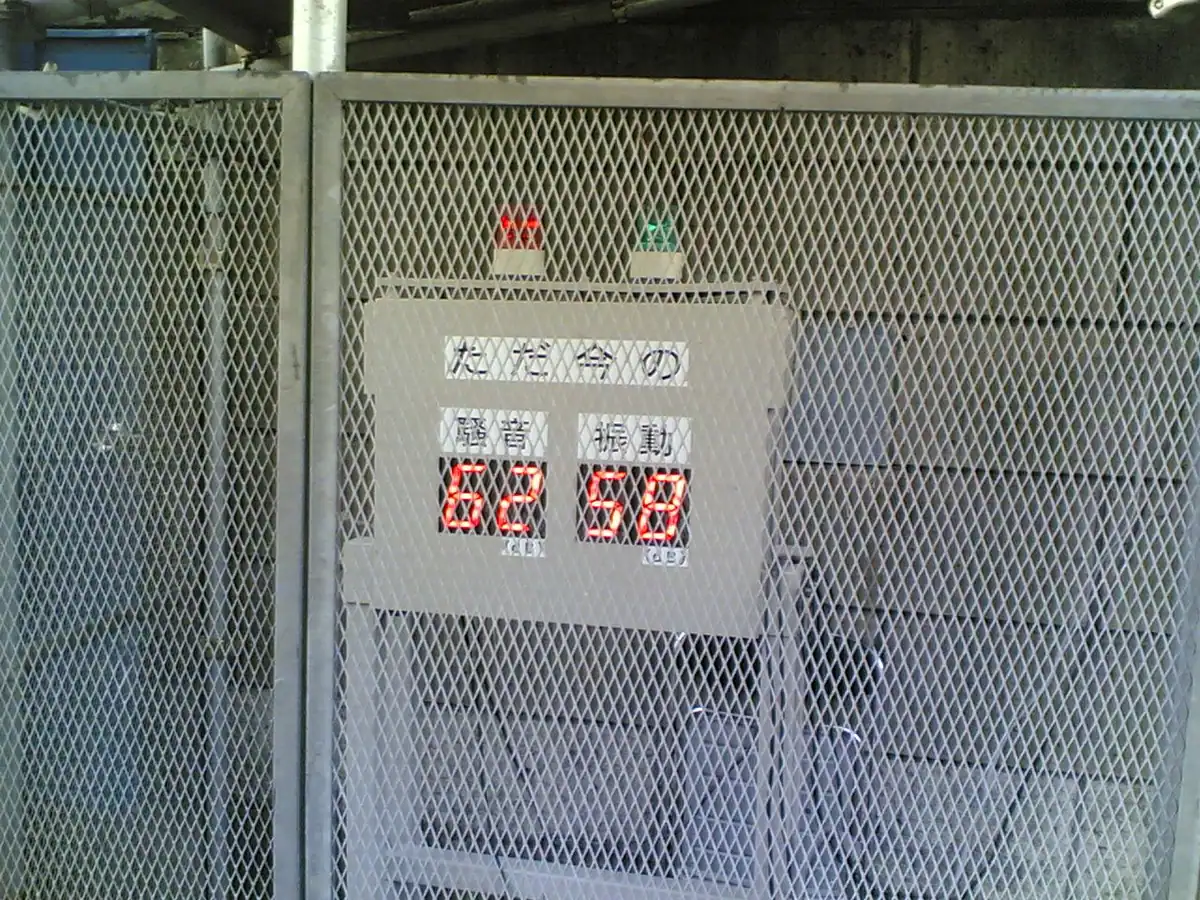
A decibel (dB) is a logarithmic way of comparing one quantity to a reference. For sound in air, the reference is a pressure of 20 micropascals (µPa), and the result is called sound pressure level, or dB SPL. Because the scale is logarithmic, every +10 dB is ten times more sound energy, which is why a 100 dB sound is far more than “a bit louder” than an 80 dB one.
Why sound needs a log scale
The human ear handles an enormous range of pressures. The faintest sound a healthy young ear can detect is around 20 µPa. Sound at the threshold of pain sits around 20 Pa or higher, about a million times greater in pressure.
Writing those numbers on a linear scale is clumsy. A logarithm compresses that million-to-one range into roughly 0 to 120 dB, which is easier to read, compare and plot.
It also fits how we hear. Our sense of loudness responds more to ratios than to absolute differences. Going from 1 to 2 Pa feels like a similar step to going from 0.1 to 0.2 Pa, and a log scale reflects that.
The two decibel formulas: 10·log10 vs 20·log10
You will see two versions of the decibel formula, and mixing them up causes most decibel math mistakes.
Power and intensity: 10·log10
For quantities that represent power or energy (acoustic power, intensity, energy density), the level is:
L = 10 · log10(P / P₀)
Double the power and you add 10 · log10(2) ≈ 3 dB.
Pressure, voltage and other “field” quantities: 20·log10
Sound pressure is a field quantity. Power is proportional to pressure squared, so the square comes out of the logarithm as a factor of two:
Lp = 20 · log10(p / p₀), with p₀ = 20 µPa
Double the pressure and you add 20 · log10(2) ≈ 6 dB.
Both formulas give the same dB value for the same physical change. A sound whose pressure doubles has four times the intensity, and both routes give +6 dB.
Quick reference
| Change in the sound | Pressure ratio | Energy ratio | Level change |
|---|---|---|---|
| Two equal sources instead of one | ×1.41 | ×2 | +3 dB |
| Pressure doubles | ×2 | ×4 | +6 dB |
| Energy ×10 | ×3.16 | ×10 | +10 dB |
| Pressure ×10 | ×10 | ×100 | +20 dB |
| Energy halves | ×0.71 | ×0.5 | −3 dB |
The 20 µPa reference
The 20 µPa reference was chosen because it is close to the threshold of hearing for a 1 kHz tone. So 0 dB SPL is not silence. It is just the reference point, and values below it are possible.
A few anchor points help:
| Pressure (RMS) | Sound pressure level |
|---|---|
| 20 µPa | 0 dB SPL |
| 200 µPa | 20 dB SPL |
| 0.02 Pa | 60 dB SPL |
| 1 Pa | about 94 dB SPL |
| 20 Pa | 120 dB SPL |
The 1 Pa = 94 dB point is the one acousticians remember, because many sound level calibrators produce exactly 94 dB at 1 kHz. If you want to go back and forth between pascals and decibels, the SPL to pressure converter does the math.
Why +3 dB means doubled energy
Say a fan reads 60 dB on a meter. Switch on a second, identical fan at the same distance. You do not get 120 dB. You get about 63 dB.
That is because unrelated (incoherent) sounds add by energy, not by decibel number. Two fans means twice the energy, and doubling energy adds 3 dB. Ten identical fans would add 10 dB, giving about 70 dB.
The same rule runs backward. Cutting noise energy in half, for example by removing one of two equal machines, lowers the level by only 3 dB. That is one reason noise control is hard work: big physical changes often produce modest dB changes.
To add or subtract levels without doing logarithms by hand, try the decibel calculator.
Why it matters for hearing
The 3 dB rule is the basis of the “equal energy” idea used in hearing conservation. If 85 dBA for 8 hours is a given dose, then 88 dBA carries the same energy in 4 hours. NIOSH uses exactly this 3 dB exchange rate for its 85 dBA recommended exposure limit, as described on its noise and hearing loss page. Our guide to OSHA and NIOSH workplace noise rules walks through the full tables.
Why +10 dB sounds about twice as loud
Energy and perceived loudness are different things. A sound with twice the energy (+3 dB) is clearly noticeable, but it does not sound twice as loud.
Listening tests over many decades have led to a widely used rule of thumb: an increase of about 10 dB is judged roughly twice as loud. That is ten times the energy for one doubling of perceived loudness.
Some practical consequences:
- A 1 dB change is hard to notice outside of a careful side-by-side comparison.
- A 3 dB change is noticeable but modest.
- A 5 dB change is clearly noticeable.
- A 10 dB change sounds about twice (or half) as loud.
These are approximations. Loudness perception depends on frequency, level and the listener. Our ears are less sensitive to low and very high frequencies, especially at quiet levels, which is why sound level meters apply frequency weightings. See dBA vs dBC weighting for how that works.
Loudness feels small, damage does not
Here is the trap. Because +10 dB only sounds “twice as loud,” it is easy to underestimate how much more energy is reaching your ears. A 100 dBA concert delivers ten times the energy of a 90 dBA one, and a hundred times that of 80 dBA.
The NIDCD notes that sounds at or below 70 dBA are unlikely to cause hearing loss even after long exposure, while long or repeated exposure at or above 85 dBA can cause it. The louder the sound, the shorter the time before damage occurs. That steep relationship comes straight from the log scale.
Distance and decibels
Distance changes level in a predictable way too. For a small source outdoors with no reflections (a “point source in a free field”), the level drops about 6 dB each time you double your distance. That is the inverse square law: double the distance, the sound spreads over four times the area, so pressure halves.
Indoors, reflections from walls and ceilings slow that drop, so real rooms rarely follow the rule closely. For rough outdoor estimates, the 6 dB rule gets you surprisingly far.
Measuring decibels yourself
A sound level meter turns microphone voltage into dB SPL using a calibration factor, then applies a frequency weighting and time averaging. You can get a feel for real numbers with the Reatims sound meter in your browser. Keep in mind that phone and laptop microphones are not certified instruments, so treat the readings as estimates, not legal or compliance measurements.
The more you measure, the more intuitive the scale gets. A quiet bedroom, a conversation and a busy street will quickly give you your own mental decibel chart.
FAQ
What does 0 dB mean?
0 dB SPL means the sound pressure equals the 20 µPa reference, which is roughly the quietest 1 kHz tone a young, healthy ear can detect. It does not mean there is no sound at all.
Why does adding 3 dB double the sound energy?
Decibels for power or intensity use 10·log10 of a ratio, and 10·log10(2) is about 3.01. So two equal, unrelated sources together read about 3 dB higher than one alone.
Does 10 dB more sound twice as loud?
As a rule of thumb, yes. A 10 dB increase is ten times the sound energy, and most listeners judge it to be roughly twice as loud, though perception varies with frequency and level.
Can a sound level be negative in decibels?
Yes. A negative dB SPL value just means the pressure is below the 20 µPa reference. Such sounds exist but are below the typical threshold of hearing.