Hearing Protection NRR Explained: What the Number Means
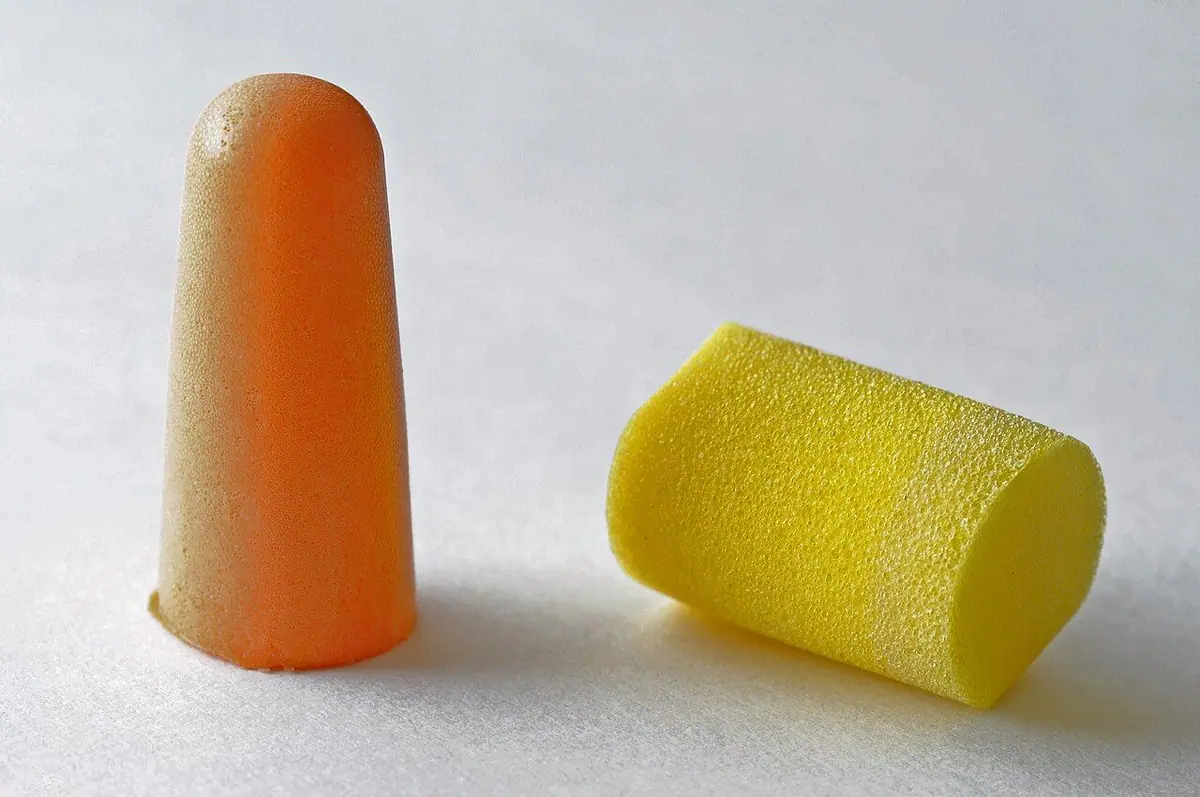
The Noise Reduction Rating (NRR) is the number on a package of earplugs or earmuffs that says how much noise the protector blocked under laboratory conditions. Most people get less than that on the job. OSHA’s field method subtracts 7 dB for A-weighted measurements and often halves the remainder. Expect a foam plug rated NRR 33 to give you something closer to 13 dB, and only if it fits well.
Where the NRR comes from
The NRR is an EPA labeling requirement. The rules are in 40 CFR Part 211, Subpart B, “Hearing Protective Devices.” They require hearing protectors sold in the US to show a rating, measured with a standardized lab test, on the package.
The test takes place in a controlled room with trained subjects, and the protectors are fitted carefully. The result is a single decibel figure that summarizes attenuation across several frequency bands. It is a fair way to compare one product with another. It does not predict the reduction you will get on a noisy factory floor, where plugs are inserted quickly, with dirty fingers, and worn for hours.
How OSHA derates the NRR
OSHA’s noise standard, 29 CFR 1910.95, includes a mandatory Appendix B that explains how to estimate whether a protector is adequate. Part of the adjustment comes from how the noise was measured. The NRR is defined against C-weighted levels. Most workplace readings are A-weighted (dBA), so Appendix B subtracts 7 dB from the NRR to account for the gap between the two weightings.
The OSHA Technical Manual (Section III, Chapter 5) adds a second step for some purposes: a 50% safety derating, because field performance falls well short of lab results. Combined, the field estimate is:
Estimated reduction (dBA) = (NRR − 7) ÷ 2
Here is the Technical Manual’s own example. A worker exposed to 98 dBA wears a protector rated NRR 25:
- With the 50% derating: 98 − [(25 − 7) × 0.5] = 89 dBA
- Without it (subtract 7 only): 98 − (25 − 7) = 80 dBA
The manual uses the derated figure when it is deciding whether engineering controls are needed. It uses the subtract-7-only figure when checking whether protection is adequate under the hearing conservation rules. If you are protecting your own ears, the derated number is the realistic one to plan around.
Our NRR calculator runs both versions so you don’t have to work them out by hand.
Dual protection
Wearing foam plugs and earmuffs together helps, though far less than adding the two ratings would suggest. OSHA’s method takes the higher of the two NRRs, subtracts 7 dB for dBA data, and adds 5 dB for the second protector. Sound reaching the inner ear through the skull is what caps the benefit.
Dual protection makes sense in very loud settings such as firing ranges, demolition work, or other places where the derated single-protector estimate still leaves you above a safe level.
Fit matters more than the number
The NRR is only as good as the fit. OSHA’s Appendix B says outright that calculated attenuation values “reflect realistic values only to the extent that the protectors are properly fitted and worn.”
Common fit problems:
- Foam plugs that are not rolled tightly and inserted deep enough. Roll the plug into a thin crease-free cylinder, pull the top of your ear up and back to straighten the canal, insert, and hold it for 20 to 30 seconds while it expands.
- Earmuffs broken up by safety glasses, long hair, or hats. Anything that breaks the cushion seal leaks sound.
- Wearing protection only part of the time. Exposure accumulates, so removing protectors for even a short stretch in loud noise uses up much of the benefit.
A simple fit check: with the protectors in, your own voice should sound louder and deeper, and the noise around you should sound clearly muffled. If one side sounds brighter, refit that side.
Foam plugs vs. earmuffs vs. musician’s plugs
| Type | Strengths | Trade-offs |
|---|---|---|
| Foam earplugs | Highest typical ratings, cheap, light | Fit depends heavily on technique; disposable |
| Pre-molded (flanged) plugs | Reusable, washable, quick to insert | Must match canal size; ratings vary |
| Earmuffs | Easy to fit consistently, easy to check from a distance | Hot, bulky, seal broken by glasses |
| Musician’s (flat-response) plugs | Even reduction keeps music and speech natural | Usually lower ratings; not for heavy machinery |
| Custom molded plugs | Comfortable for long wear | Cost; fit must be verified |
Pick based on the noise and the job. A lawn mower or table saw calls for foam plugs or muffs. A rehearsal or concert is where musician’s plugs work well, because they reduce volume without making the music sound muffled. Hunting or shooting often calls for both.
Check your exposure first
To choose a protector you need a rough idea of how loud your environment is and for how long. Start with the free sound level meter to get an estimate of the level, then use the noise exposure calculator to see how quickly your daily allowance runs out. Keep in mind that a phone or laptop microphone gives an estimate, not a calibrated measurement. Our guide to smartphone sound meter accuracy explains the limits.
As a broad reference, NIDCD notes that long or repeated exposure to sounds at or above 85 dBA can cause hearing loss. If your estimate lands near or above that, wear protection. For workplace rules, see OSHA workplace noise rules.
Quick summary
- The NRR is a lab rating used for comparing products. It is not a promise of real-world performance.
- For dBA exposures, subtract 7. For a realistic field estimate, halve the remainder.
- Two protectors give you about 5 dB more than the better one alone.
- A good fit, worn the whole time, matters more than a high rating.
General information, not medical advice.
FAQ
Does an NRR of 33 mean my exposure drops by 33 dB?
No. The NRR comes from lab tests with ideal fitting. OSHA's field method subtracts 7 dB when your exposure is measured in dBA, and for some purposes it also cuts the remainder in half, so an NRR 33 plug works out to about 13 dB of expected real-world reduction.
How much extra protection do I get from wearing earplugs and earmuffs together?
OSHA's estimate is about 5 dB more than the better of the two protectors on its own. The two ratings are not added together, because sound also reaches the inner ear through the bones of the skull.
Are musician's earplugs as protective as foam earplugs?
Usually not. Musician's plugs are built to cut sound evenly across frequencies, so they typically carry lower ratings than well-fitted foam plugs. They suit music listening and rehearsal, but they are a poor choice for very loud machinery.
What is the best hearing protector?
The one you will wear correctly for the entire time you are exposed. A lower-rated protector that is worn consistently and fits well beats a high-rated one that is loose or keeps coming out.